



Turkish food, along with its culture and amazing people are undoubtedly the soul of Turkey. Their cuisine has been developed over centuries, starting with nomadic tribes who roamed Central Asia and settled in Anatolia. They brought their traditions to the table when they created a new home for themselves. Today, Turkish dishes are known for being both diverse and extremely flavorful. This guide will provide you with an introduction to traditional Turkish cuisine: what it is, how it varies from region to region, and some great examples of excellent traditional Turkish dishes.
Traditional Turkish cuisine is the foundation of Turkish food. It’s based on simple, fresh ingredients and flavors that are common throughout the country. Dishes vary from region to region, but there are some general characteristics that define Turkish cuisine as a whole. For example, most Turkish dishes are savory and hearty, with a focus on vegetables, meat, and grains. There is also a strong emphasis on using fresh and local ingredients. Spices are at the heart of Turkish traditional cuisine: there are strong, earthy flavors such as cumin, paprika, and sumac, used to add distinctive taste to dishes.
Grains are a mainstay of Turkish food. Rice, bulgur wheat, and pasta are all popular in certain regions or cities. Bread is another staple ingredient consumed with almost every meal. It accompanies dips like hummus, fava bean paste (börülce), eggplant caviar (kavurma) and, of course, olive oil. Bread is used to scoop up dips and sauces before eating them with a bite of meat or vegetables. Turks also use bread as a component in some dishes: layered pastries called boreks are stuffed with meats or cheese and cooked until they become golden brown.
Turkish cuisine includes a wide variety of dishes from different regions. Each province has their own traditional dishes and ways to prepare them, being influenced by its history and geography. For example, the Aegean region is known for seafood specialties like marinated mussels or fried calamari with garlic sauce. However, you can also find local specialties of other parts of the country, including stuffed zucchini flowers or Su böreği, a delicious Northern Turkish dish made with meatballs and buttery egg noodles.
Ankara is known for its kebabs (grilled meats that are typically served as a sandwich or wrap). Kebabs can be made with lamb, beef, chicken, or vegetables, and are often paired with rice and salad. An extremely popular type of kebabs – Nazik kebabs consist of meat cooked with fresh vegetables and fragrant spices. Nazik kebabs are a great example of Turkish cuisine because they combine meat, fruit and vegetable to create a hearty yet healthy dish. Other popular dishes from Ankara include mantı (large dumplings filled with meat and spices), gözleme (a savory flatbread), and tum beyendili (a dish made of slow-cooked lamb).
In Istanbul, you can find a wide variety of cuisines, including traditional Turkish dishes as well as international favorites. However, some of the best examples of Istanbul’s traditional cuisine can be found in the city’s many street food stalls. One popular food is simit, which is a type of sesame-coated bagel to be eaten on its own or used as a scoop for cheese. Another popular dish is kumpir, which consists of baked potatoes stuffed with goodies like milk sauce, mayonnaise and sausage.
Eastern Turkey is known for its hearty and spicy dishes. One of the most famous is İçli köfte, which is a type of meatball made with bulgur wheat, onions, tomatoes, and spices. Another popular dish from Eastern Turkey is külbastı, a meaty dish made with lamb and yogurt. It’s often eaten as a spread on bread or used in dishes like soups and stews.
Delicious, fresh ingredients like yogurt and olive oil are also a trademark of traditional Turkish cuisine. Yogurt is used in many dishes as it can add creaminess or thickness to soups or sauces; it’s even served as an appetizer on its own. In addition, olive oil is a common ingredient in Turkish cuisine. It’s used to make salad dressings or drizzled onto simit (Turkish-style bagels) and pide (flatbreads), which are often dipped into fresh hummus before eating.
Turkish appetizers often consist of meze (a selection of small dishes usually served with drinks). One popular meze dish is cacık, which is made using dried or fresh cucumbers soaked in yogurt, then seasoned with garlic and dill. Eggs can also be turned into a meze dish by hard-boiling them, then slicing or chopping the egg whites and mixing them with spices.
Meats are a key part of Turkish cuisine. Popular types include beef, lamb and chicken; these are often cooked using traditional methods like roasting, grilling or braising. Popular meat dishes include kokorec (lamb meat grilled on a skewer), İskender kebab (thinly sliced lamb served with yogurt sauce), and patlıcan köftesi (meatballs made with ground beef and eggplant).
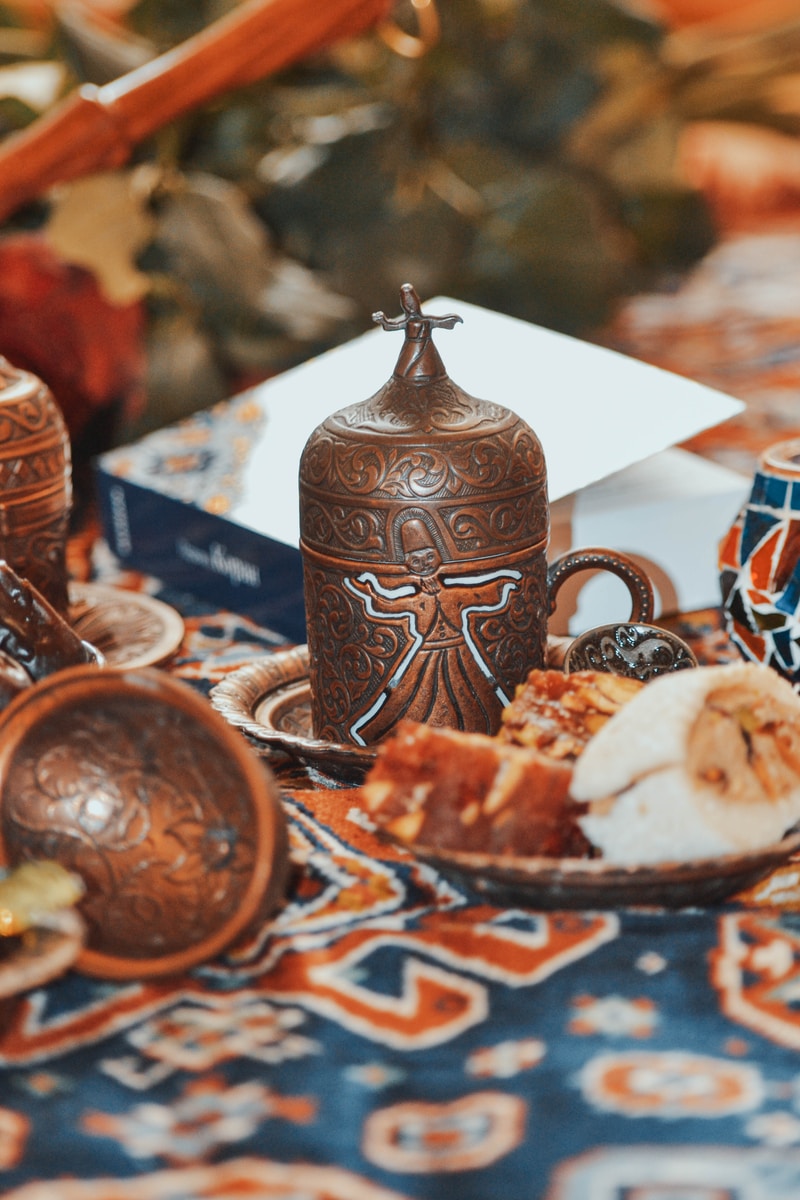
Turkish sweets are famous throughout the world: the most common are baklava, a flaky pastry filled with pistachios or almonds; kadayıf (dough soaked in syrup and topped with nuts); tulumba, fried donuts dipped in sugar syrup; revani cake, made of semolina flour sweetened with syrup or honey and lokma, a deep-fried dough ball soaked in sugar syrup. Turkish delight, a soft, chewy confectionery made with rosewater and pistachios, is also a popular sweet.
Drinks in Turkish cuisine are also worth mentioning. Ayran is a yogurt-based drink enjoyed throughout the country; it can be served salty or sweet, and is sometimes flavored with mint or cucumber. Turkish coffee is another popular beverage: it’s made by boiling finely ground coffee beans in water and then adding sugar. The coffee is poured into small cups and served with a glass of water. Tea is also popular in Turkey, usually made of black tea leaves, sugar and lemon. Tea is served with or without milk, and is sometimes flavored with spices like cardamom or cinnamon.